Leveraging Amazon Promos & Coupons for Increased Revenue
In this guide, we'll explore how you can strategically use coupons and promos to boost your sales while addressing potential disadvantages and concerns.
.png)
While discounting your products isn’t always the right “value” move, it is an intelligent strategic lever for growth. Used correctly, coupons and promotions increase visibility, accelerate sales velocity, and help you move inventory efficiently. Used carelessly, they erode margins and burn budget.
This guide breaks down exactly how Amazon coupons and promos work, what's changed with Amazon's updated fee structure, and the strategies that actually move the needle for sellers.
What Are Amazon Coupons & Promos?
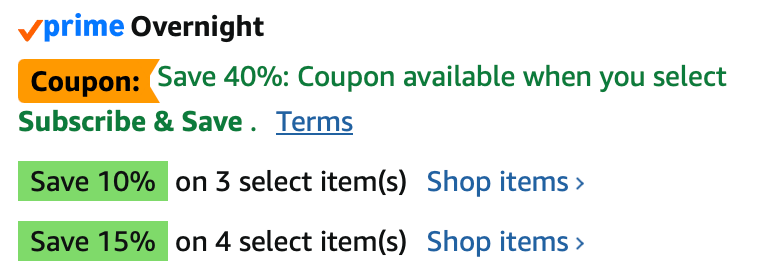
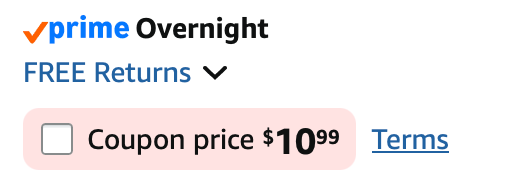
Amazon coupons and promotions are digital discounts sellers can apply to their products to incentivize purchases. They appear throughout the Amazon store, in search results (marked with a green "Coupon" badge), on product detail pages, and on the Amazon Coupons homepage, giving your listings additional visual prominence wherever shoppers are browsing.
Discounts can be structured as a percentage off or a flat dollar amount. The key distinction between a coupon and a promotion is the mechanism: coupons are clipped by customers before purchase, while promotions (like Lightning Deals or Best Deals) are automatically applied at checkout during the promotional window.
Both tools serve the same ultimate goal: putting your product in front of more buyers and converting more of them at a price point that drives purchase decisions.
Eligibility Requirements (Updated for 2026)
Before you create a coupon, your account and your products both need to meet Amazon's eligibility standards.
Seller Requirements
- Active Professional selling plan
- Seller feedback rating of 3.5 stars or higher (sellers with no feedback yet are also eligible)
Product Requirements
- Products with 1–4 reviews must have an average rating of at least 2.5 stars
- Products with 5+ reviews must have an average rating of at least 3.0 stars
- Products with zero reviews are eligible
- High-rated products (4.0+ stars with 5+ reviews) can create coupons even without an established "Was Price" history
- Discount must fall between 5% (minimum) and 50% (maximum) off the current price
- The coupon price must be lower than the product's "Was Price" or its recent lowest selling price
Important: Coupons cannot be used as an incentive for customer reviews explicitly or implicitly. This violates Amazon's review policy and puts your selling account at risk.
Amazon's New Coupon Fee Structure
In 2025, Amazon restructured how it charges for coupons. The marketplace replaced its old flat $0.60-per-redemption fee with a performance-based model:
- $5 flat fee per coupon created
- 2.5% of total coupon-attributed sales (capped at $2,000)
This shift changes the economics significantly depending on your price point. For lower-priced products (generally under $22–$25), the new model often results in lower total fees than the old per-redemption structure. For higher-priced products with strong sales volume, the 2.5% fee can add up quickly.
Example: If your coupon generates $4,000 in sales, your total coupon fee is $5 + (4,000*0.025) = $105. On a $20 product, that's roughly $0.53 per unit sold, potentially better than the old $0.60 flat rate. On a $50 product with thinner margins, the math looks very different.
The practical takeaway: the new fee structure rewards high-volume, lower-priced coupon campaigns and penalizes low-volume campaigns on high-price, low-margin products. Build your coupon strategy around those economics.
Common Coupon Eligibility Issues (& How to Fix Them)
No Reference Price / "Was Price" Error
Your product needs a sales history for Amazon to calculate a "Was Price" (the median price paid over the last 90 days, excluding flash sales). Without it, your coupon won't be eligible.
Fix: Build sales history first, then create the coupon once a reference price is established. High-rated products (4.0+ stars, 5+ reviews) are exempt from this requirement.
Discount Outside the Allowed Range
Your coupon discount must be between 5% and 50%. A discount below 5% won't qualify; a discount above 50% may trigger review suppression concerns.
Fix: Adjust your discount percentage to fall within the 5–50% window.
Coupon Price Not Lower Than Recent Lowest Price
Amazon requires the coupon price to be lower than both the "Was Price" and the lowest price charged in the last 30 days. If you recently ran a sale at a low price, your current coupon must beat that.
Fix: Either set a lower coupon price, or wait for the 30-day window to reset before creating the coupon.
Effective Strategies for Amazon Coupons & Promos
1. Match the Tool to the Goal
Coupons and promos serve different purposes. Coupons work best for sustained visibility boosts; the green badge in search results increases click-through rate and keeps your product competitive over days or weeks. Lightning Deals and Best Deals create urgency and work best for event-driven spikes (Prime Day, Black Friday, product launches). Choose the right tool for the job, and be specific about what outcome you're measuring.
2. Prioritize High-Margin Products
With a 2.5% fee on sales, margin math matters more than ever. Run coupons on products where your margin can absorb both the fee and the discount without going negative. A 10% coupon on a product with a 40% margin is a smart investment; the same coupon on a 12% margin product is a path to losing money at scale.
3. Pair Coupons with Sponsored Products Campaigns
Running a coupon without paid traffic is like putting a sign in a window no one walks past. When you combine a coupon (which improves conversion rate) with Sponsored Products (which drives traffic), the result compounds: more shoppers see your listing, and more of them buy. This combination is particularly effective when launching a product, re-energizing a stagnant listing, or capitalizing on high-traffic sales events.
4. Use Coupons to Move Excess Inventory
Carrying excess inventory means paying Amazon fulfillment storage fees every month. A targeted coupon that accelerates sell-through on slow-moving SKUs can be significantly cheaper than months of storage fees, especially heading into Q4 when long-term storage fee thresholds apply.
5. Bundle Products to Maximize Coupon Value
Creating bundles before applying a coupon serves two purposes: it increases average order value, and it spreads the $5 flat coupon fee across a higher-revenue transaction. A $10 coupon on a $60 bundle is far more cost-efficient than a $5 coupon on a $15 single product.
6. Optimize Listings Before Launching Promotions
A coupon that sends traffic to a weak listing is wasted spend. Before you promote, make sure your main image is strong, your title includes relevant keywords, your bullet points clearly communicate value, and your A+ Content is live. Paid or promotional traffic should amplify what's already working.
7. Promote Your Coupons Off-Amazon
Amazon's Coupons search placement give you built-in exposure, but don't stop there. Sharing coupon codes through your brand's social media, email list, or influencer partnerships drives external traffic, which Amazon's A10 algorithm rewards with improved organic ranking. Off-Amazon traffic signals brand demand and helps your listing build authority over time.
Benefits of Amazon Coupons & Promotions
- Increased Sales Velocity: More purchases in a shorter window signals strong demand to Amazon's algorithm, which can improve your organic ranking and search visibility, creating a compounding effect well beyond the coupon period itself.
- Inventory Clearance: Coupons are a controllable, predictable tool for moving excess or slow-moving inventory before it starts accumulating long-term storage fees. You set the discount, you control the budget.
- Improved Conversion Rates: The green coupon badge in search results is a visual cue that captures attention. Shoppers actively comparing options are more likely to click and convert when a discount is already visible before they reach your detail page.
- Customer Acquisition: Price-sensitive shoppers who discover your product through a promotion can become repeat buyers, particularly if you're enrolled in Subscribe & Save or have a strong brand store to draw them back to.
Potential Downsides to Watch
- Margin Compression: The combination of the $5 flat fee, the 2.5% sales fee, and the discount itself can quickly erode profitability especially on lower-margin or lower-priced products. Model your margins before launching, not after.
- Increased Ad Spend: Pairing coupons with Sponsored Products campaigns accelerates results, but it also accelerates spending. Set daily budgets and monitor Advertising Cost of Sale (ACoS) closely to make sure the combined investment is generating profitable growth.
- Coupon Clipping Without Redemption: Customers can clip coupons and never redeem them. Under the new fee structure, you're only charged when a sale occurs (the 2.5% component) plus the flat $5 creation fee, so unredeemed clips don't directly cost you. But they can affect how Amazon measures your coupon performance over time.
When to Use Alternatives to Coupons
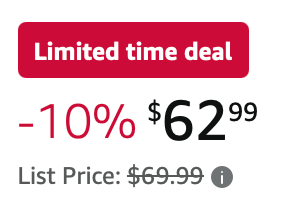
Coupons aren't always the right tool. If your product price point is above $25-$30 and you have the sales volume to trigger it, a Best Deal or Lightning Deal may deliver better ROI. The deal badge ("Deal" or "Limited-time deal") carries stronger visual weight in search results than the coupon badge, and the fee structure (now $70/day + 1% of deal sales, capped at $2,000) may work out more favorably at higher price points.
For Prime members specifically, Prime Exclusive Discounts (PEDs) are worth evaluating: they're displayed prominently in search results for Prime shoppers and can be especially powerful in the lead-up to Prime Day. Note that PED fees increased to $100 per discount as of June 2025.
Brand Tailored Promotions are another option worth exploring. Available exclusively through Brand Registry, they let you target specific audience segments (like repeat customers or high-spend shoppers) with personalized discounts that don't require a coupon badge.
How to Protect Your Bottom Line
Amazon coupons and promotions are powerful tools when used strategically. With the fee changes now in effect, the margin math has shifted, and sellers who don't account for the new(er) structure are likely leaving money on the table or spending inefficiently.
The brands winning with promotions are the ones pairing the right promotional tool with the right product, at the right margin, with optimized listings and coordinated paid traffic behind them.
If you want to build a promotional strategy that drives real, measurable growth, contact AO2 today. We build and manage Amazon advertising and promotional strategies for brands serious about scaling profitably.
Latest Updates


Curious what AO2 can do for your brand? Schedule a call today.
.svg)


.webp)